English
 Русский язык
 بالعربية


Products Description
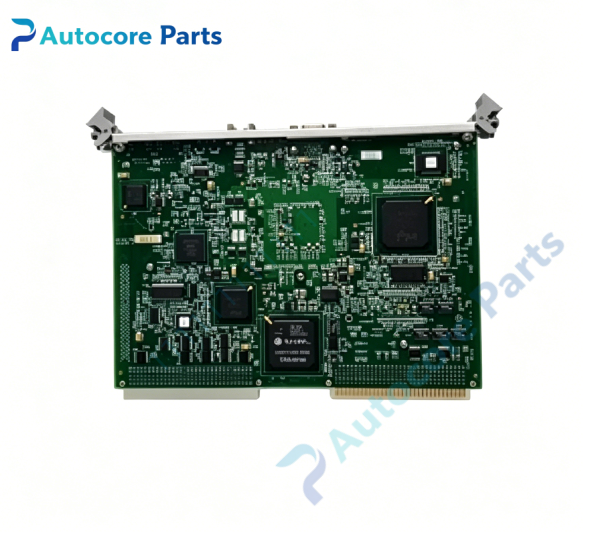
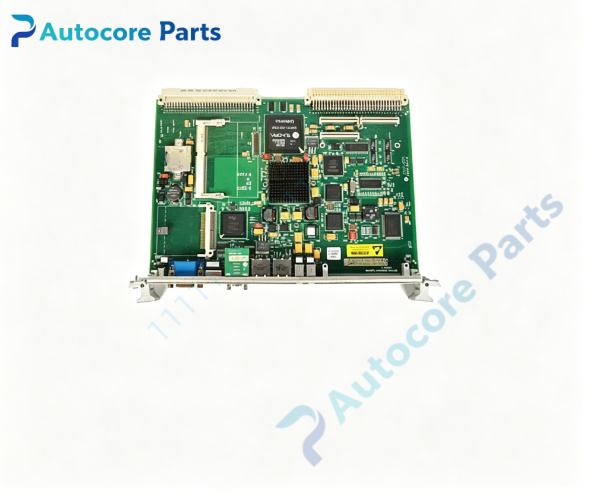
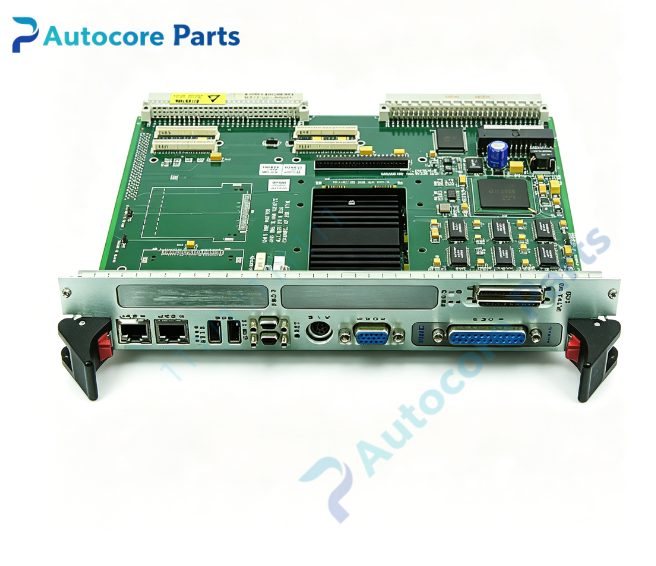
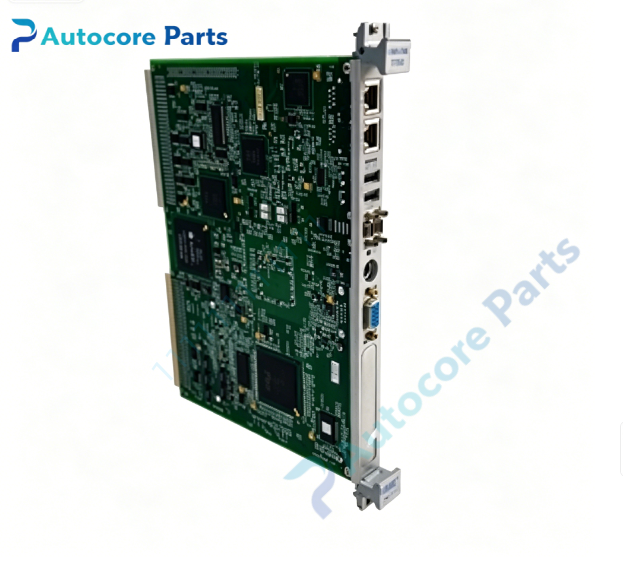
VMIC VMIVME-7751 Pentium III Single Board Computer

Module Feature
VMIVME-7751 is a double-slot 6U VMEbus single board computer developed by VMIC, powered by Intel Pentium III FC-PGA processor with maximum frequency up to 1.26 GHz, built on Intel 815E chipset and 133 MHz front side bus. It supports up to 512 MB PC133 SDRAM via single 144-pin SODIMM socket, equipped with 32 KB battery-backed nonvolatile SRAM to retain critical control parameters and fault logs after power loss. The board supports optional 1 GB bootable flash storage, Ultra-IDE floppy controller and optional PCI dual-channel Ultra160 SCSI interface routed through P2 rear connector. Three PMC mezzanine expansion sites (two support rear I/O routing) comply with IEEE P1386 standard, compatible with 5 V PMC modules for fiber reflective memory, analog I/O or additional communication interfaces. Hardware endian conversion circuit automatically completes big/little endian byte swap for cross-endian VME bus communication between x86 CPU and big-endian VME peripherals. Onboard peripheral resources include dual independent 10/100BASE-TX Ethernet ports, two 16550-compatible RS232 serial ports, ECP/EPP enhanced parallel port, USB1.1 interface, front-panel PS/2 keyboard & mouse and battery-backed real-time clock. Two 16-bit plus two 32-bit programmable timers and software-selectable hardware watchdog timer; watchdog timeout can trigger NMI interrupt, VME SYSFAIL signal or full system hardware reset. Fully VME64 compliant, supporting A16/A24/A32 addressing, D08/D16/D32, BLT and MBLT64 block transfer modes, capable of acting as VME bus system controller. Rugged double Eurocard construction with conformal coating, shock and vibration screened for power plant cabinet environment, widely used in gas/steam turbine control, power plant DCS, aerospace hardware-in-loop simulation and high-reliability industrial VME chassis.
Working principle
Intel Pentium III processor executes PC/AT compatible operating system and user control application. PCI-VME transparent bridge chip implements full VME master and slave function, accessing registers and memory of other VME peripheral modules. Hardware byte swap circuit automatically adjusts data byte sequence for cross-endian bus communication between x86 CPU and big-endian VME devices. Triple PMC slots expand system functionality by installing mezzanine I/O or communication modules. Dual Ethernet controllers handle redundant network data transmission; 16550 UART chips drive RS232 serial communication. Battery-backed RTC maintains system time and nonvolatile SRAM preserves key configuration data during power outage. Hardware watchdog continuously monitors software heartbeat signal; once timeout occurs, it triggers fault interrupt or hardware reset to avoid system lockup. VME interrupt controller receives interrupt signals from peripheral VME boards and forwards to CPU core.
Onboard components
Intel Pentium III CPU,144-pin SODIMM memory socket,AGP SVGA graphics chip with 4 MB video cache,dual 10/100 Ethernet PHY chips,dual 16550 UART,ECP/EPP parallel port,USB1.1 controller,32 KB battery-backed SRAM,battery-backed RTC,Ultra-IDE & floppy controller,optional Ultra160 SCSI controller,PCI-VME bridge,four programmable timers,watchdog logic,three PMC connectors,VME J1/J2 transceivers,front panel I/O connectors,multi-status LED array,manual reset pushbutton.
LED indicators
Front panel LED indicators for board +5 V power,VME bus activity,VME SYSFAIL fault and watchdog alarm.
Hardware self-diagnosis
Visual inspection of PCB,front ejectors and solder joints;board ID register readback verification;power-on POST self-test;memory read/write cyclic verification;SVGA display test;dual Ethernet loopback test;serial and parallel port loopback test;watchdog timeout validation;VME A32/MBLT64 block transfer communication test.
Programming software
VMIC board support package and driver library,supports VxWorks,Linux,QNX and Windows embedded operating systems;universal BIOS/bootloader configuration utility for memory,boot sequence and watchdog setup.
Electrical & Process Parameters
Model: VMIVME-7751 Brand: VMIC Device type: Double-slot 6U VMEbus VME64 single board computer Bus standard: VME64, A16/A24/A32 addressing, D08/D16/D32, MBLT64 block transfer Processor: Intel Pentium III up to 1.26 GHz Memory: Max 512 MB PC133 SDRAM, 32 KB battery-backed nonvolatile SRAM Graphics: AGP SVGA with 4 MB video cache Interfaces: Dual 10/100 Ethernet,2 × RS232 serial,ECP/EPP parallel,USB1.1,PS/2 keyboard & mouse,IDE / optional Ultra160 SCSI Expansion: Three PMC mezzanine slots Control mode: VME master / slave operation,hardware byte swap,programmable watchdog Power supply: +5 V from VME backplane Cooling: Passive convection cooling Protection: Over current,ESD protection,watchdog auto-reset,VME bus error detection Mounting: Double-height 6U VME front panel ejector locking Protection class: PCB with optional conformal coating
Mechanical & Structure
Mounting: Double-slot 6U VME Eurocard Protection class: PCB with optional conformal coating
Environmental
Operating temperature: 0℃ ~ +60℃ Storage temperature: -40℃ ~ +85℃ Ambient humidity: 5~95% non-condensing Certification: CE compliant Status: VMIC triple-PMC VME64 Pentium III single board computer
Installation
Follow ESD safety procedure before handling.Fully power off VME chassis.Insert VMIVME-7751 into vacant double-height 6U VME slot and lock front panel ejector latches.Install PMC mezzanine modules if required.Connect front panel Ethernet,serial,USB,PS/2 and video peripherals.Wire IDE or SCSI storage devices to rear P2 connector.Power on chassis and enter BIOS to configure boot sequence,memory and watchdog parameters.Install OS and VMIC VME drivers,run POST and full peripheral diagnostic before commissioning.
Interface
VME J1/J2 backplane connector,three PMC mezzanine sites,dual RJ45 10/100 Ethernet,dual DB9 RS232 serial ports,SVGA video,USB1.1,PS/2 keyboard/mouse,IDE/SCSI via P2 rear I/O,fault status signal pins.
Diagnostic
Board fails POST: faulty SODIMM memory,defective CPU chip or abnormal backplane power. VME block transfer unstable: poor backplane contact,missing bus termination,PCI-VME bridge hardware fault. Network link failure: damaged cable,PHY chip damage or duplex mismatch. RTC and SRAM data loss: backup battery depletion. Watchdog fails to trigger: wrong BIOS watchdog parameter setup.

Product Brief
VMIC VMIVME-7751 double height 6U VME64 single board computer,Intel Pentium III up to 1.26 GHz CPU,triple PMC expansion slots and hardware byte swap,for high-performance rugged embedded control,power plant DCS and real-time hardware-in-loop simulation VME chassis systems.