English
 Русский язык
 بالعربية

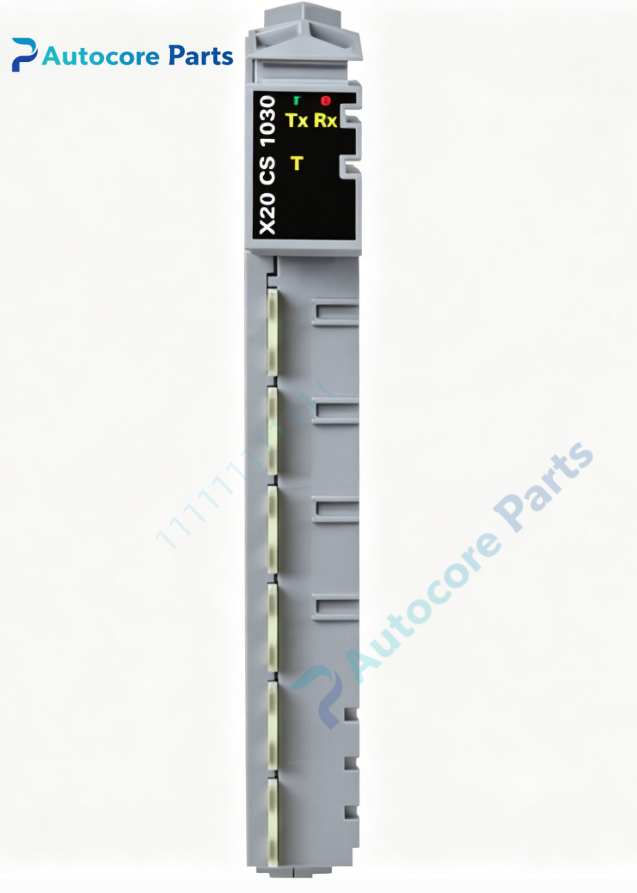


Products Description
B&R X20CS1070 CAN Bus Communication Interface Module

Technical Specifications
Model:X20CS1070
Brand:B&R
Product Type:X20 system CAN bus communication interface module
Applicable System:B&R X20 PLC system,realize CAN bus connection with CAN‑based sensors,actuators and field devices
Interface:1×CAN bus
CAN Controller:SJA1000
Max Transfer Rate:1 Mbit/s
Max Cable Distance:1000 m
Identifier Support:11‑bit standard frame,29‑bit extended frame
Buffer:Transmit and receive object buffer
Terminating Resistor:Integrated module‑internal terminating resistor,software switchable
Connection:Match X20TB12 12‑pin terminal block for field wiring
Power Consumption:0.01 W(bus),1.44 W(I/O circuit)
Installation:Install on X20BM series bus module,support local station and distributed X2X‑Link remote station
Indicator:Multi‑color LED for module status,CAN data transfer,terminating resistor and bus‑off fault diagnosis
Degree of protection:IP20
Certification:CE,cUL‑us,ATEX Zone2,UKCA,DNV,CCS,LR,ABS,BV marine certification,KC
Working temperature:‑25℃ ~ +60℃(horizontal mounting),‑25℃ ~ +50℃(vertical mounting)
Storage temperature:‑40℃ ~ +85℃
Relative humidity:5‑95% non‑condensing,pollution degree 2

Built‑in function
X20CS1070 CAN bus module expands CAN bus interface resource for X20 controller,realizes data interaction with CAN‑protocol field devices. Integrated software‑switchable terminating resistor simplifies bus terminal wiring. Transmit‑receive object buffer improves CAN communication stability,supports standard and extended CAN frames. LED and software diagnosis realize fast bus‑off fault locating,support local X20 I/O and X2X‑Link distributed remote stations deployment.
Product Brief
X20CS1070 belongs to B&R X20 I/O system family,it is single‑channel CAN bus expansion module for X20 automation system. X20TB12 terminal block needs to be ordered separately. Widely used for original B&R automation equipment maintenance and renovation. Before purchase,please confirm CAN baud rate and frame format requirement. ESD anti‑static protection shall be followed during installation